Monday, November 05, 2007

When Harry Met Sally


Women who aren’t married and want to be sometimes ask me how I met my husband. It was a long path through a chain of bands, which could have gone several different ways – and in that sense, it seemed like fate.

I could have met him right away if I had gone to a Stiff Richard show at the Metro. There was a blackboard above the downstairs bar that listed the bands for the week and I saw the name. The band was Guy Pettengell, guitar and songwriter, Billy Britt, drums, and Bobby Jorgenson, bass. In due time, I received their CD “Squeeze” in the mail and gave it to Peter Bell to review because he knew Pettengell from somewhere and was eager to review it. The review was okay but not glowing.

Time passed and Bell himself got into a band, October. Ironically, Jorgenson was playing guitar in that band, a holdover from the original line-up called Solid Ground. Bell urged me to see them because, he promised, Jorgenson looked like Frank Daniel, a guy from Single Bullet Theory and My Uncle’s Old Army Buddys who I had a futile crush on.

It was true. They could have been related. I saw October at Jimmy Ryan’s and Moondance. Before the Moondance show, the band Thelma Shook had decorated my front door in the dead of night with flyers and cardboard “Shook” eyeglasses, and left me a whole box of cassettes. I was passing out those cassettes to everyone at Moondance, encouraging people to submit reviews. One of the people who got a cassette was Jorgenson.

I still remind him that if he had only written a review and gotten in touch with me to submit it, we might have met a year sooner, but he didn’t. (Small World aside: He went on to play bass in Thelma Shook.)

Time passed. I had heard of the band Joe America. Frank used to go see them play, and never invited me, which made me very curious about this mysterious local music scene that hardly anyone knew about that didn’t start until 11 o’clock at night. We’d go to dinner and a movie, and then he’d leave and go on for part two of his evening without me. Where did he go? What did he do? Who did he meet? That curiosity birthed the Richmond Music Journal, so now I had a reason to see Joe America for myself, without a date. I was a reporter.

This band took me to venues I had never been to before, and never went to again, like the Bus Stop in Shockoe Slip and Cimarron Rose on Midlothian Turnpike, a steakhouse famous for its superdelicious cinnamon buns. There’s a Walgreen’s now on Buford and Midlothian where this place was. I loved their cassette, “What World?” and knew all the songs by the time I first saw them, so their originals were as familiar as covers to me.

The band was Chris Douthit, JJ Loehr, Keith MacPhee, Chip Farnsworth and Merewyn, a background vocalist. The other background vocalist, Chuck, had been promoted to “management” and their soundman, Flash, had gone on tour with Reba McEntire, so now they had Bill Murray on sound and lights. It was the first big operation outfit I encountered. (Small World aside: MacPhee had been in Single Bullet Theory, too. Loehr had traveled with Bell as an opening act when Bell was in Ten Ten and had been in a band with Frank.)

Even before 9/11, Joe America stood for patriotism. “We’re watching CNN, a lot of political debates, we’re thinking about racism, looking at both sides of things. We’ve got the best of everything in America and we should be praising that. That’s Joe America. We go after things harder. We can stand in the face of all kinds of things. America is still a place where if you try, and work hard, it’s going to come true for you.”

Their song “Bad Days” was a tribute to people who fought in Desert Storm.

They had talent, equipment, great songs, enough covers to placate the bookers, a great PA, lights, and touring truck, but there was mysterious “bad blood going around town with the clubs…if you get on the wrong side of people in this town, it really hurts, and we’ve made the mistake of trying to expose ourselves at some wrong times.”

What?

“Where we belong is having the Dave Matthews Band open for us. We have values, we’re straight with people; we’re upfront; we don’t tell lies. That’s the greatest thing about our band. We’re trying to work through the music scene in Richmond, but there’s a whole lot of schmucky people.”

Douthit was proud of the fact their songs varied. “You check the Beatles out. Every song doesn’t sound the same. But you go down to hear Fulflej, the Pleasure Astros, every song is the same, even the same lyrics. These kids have one good idea and they do it every time on every song. We do acoustic, electric, go over the edge, overdrive, but we keep it dynamic.”

The real reason their songs sounded different was they had three very distinct songwriters, MacPhee, Loehr and Douthit, bringing in material. I especially liked Loehr's "Think About a Song" and "Every Little Danger." I still have a version of the latter on my iTunes. "Guardian Angel" and "Lies" were my MacPhee favorites.

Soon enough, they dissolved. Time passed. When MacPhee formed a new band with Keith Clarke called Grumbledog, I got a call from Clarke to come out to see them at Twisters. It was MacPhee’s Joe America songs again, interspersed with Clarke’s excellent pop tunes which sounded like radio-ready ‘90s hits. It was a good show, so I was ready to go see them again next time they called. They were going to be at the Sunset Grill. But they weren't a three piece anymore. They had a new drummer, Farnsworth from Joe America. And oh….they added a second guitar, Bobby Jorgenson. By the end of their set on the Sunset Grill’s outdoor stage, I had made up my mind. It took a couple more shows to bag him.

And that’s how we met. It only took three years and four bands. No woman who has ever asked to hear this story has made it to the end. They want to know an easier way to meet a guy. Or at least a quicker one.

Thursday, November 01, 2007

Letters, We Get Letters

Several months into the first year of the paper, the letters to the editor section was rocking, and it stayed rocking almost until the end of the paper’s run. We’d often have two full pages of them, and not made-up letters like Punchline or Brick, either.

This was accomplished by eliminating the biggest hurdle to writing letters to the editor: the writing part. This was before email became commonplace. You actually had to put a stamp on a letter back then. I got a second phone line and put an answering machine and a fax on it just for letters, comments, complaints, whatever, day or night, and that line often rang through the night. This was also more than a decade before the Richmond Times-Dispatch thought up the “Your 2 Cents” call-in line.

The fax line did okay, but the answering machine steadily produced pages of copy for the paper every issue. People called in from the clubs to shout their approval of whatever band they were watching…and this was also before cell phones were affordable, so they were calling from pay phones. Someone regularly called from the Village pay phone to complain about the local music scene. Guys called post-coitus from bed and put their husky-voice girlfriends on the line to comment. Mostly they called to complain about the paper, complain about the music scene, complain about local radio, and promote themselves.

“It’s weird to me that you guys are trying to promote local music, yet every issue is about what you guys did every night at a club. There’s more than three or four ways of looking at the scene here in town.”

But I only had three or four writers.

“The jazz scene in Richmond is tired. Jazz is an emotional thing, and all these white guys in Richmond are trying to make it a technically academic, non-emotional thing, headwise great jazz, but heart-wise, no…All the same guys are still all the same guys. The ones who were popular 10 years ago and running the show are still doing it.”

Guess what, still all the same guys.

“We want to read more about the new bands. You could be using the ‘Lyrics and Deep Thoughts’ page for more band interviews. Just do band interviews and record reviews.”

There is nothing duller than a band interview. It is essentially the same story over and over. Guys meet. Form a band. Think they have lightning in a bottle or a different sound. Want to get discovered. Gigging for dollars in crappy bars to small crowds of indifferent beer drinkers watching sports on the TV right over the band’s heads. Van keeps breaking down. Drummers keep quitting. Get money together to finally record debut album. Recording process is so acrimonious, band breaks up when the album is finished. The two guys most serious about the music, usually the ones who wrote the songs, form a new band. Process starts over.

Then for a few lucky ones, they actually do get signed by an offshoot of a major label, or even a major label. Record producer makes them change their sound to something more like what is currently popular. The songs that got them noticed are homogenized until they sound derivative and overproduced. The band is sent out on some grueling tours with little marketing support for the tour or the album. Label doesn’t pick up their option. They come home, sometimes broke and with nothing to fall back on, sometimes with just enough money to buy a house, start their wife in a business, or open a recording studio.

I don’t know if that’s exactly what happened to Fighting Gravity, Agents of Good Roots or The Ernies, but I do know their shows and their self-produced music sounded better than their label releases. I was especially disappointed in Agents. Their little cassette they sold at shows was terrific. Their label debut CD: barely recognizable as them.

“Nobody cares about bands like My Uncle’s Old Army Buddys and Useless Playboys. You should be writing about bands like King Sour, Kepone, Used Carlotta, Spike the Dog, Bucket and The Seymores. They’re all signing record contracts.”

Then there was Frog Legs, who found a way to do theater on my answering machine. With various members on different extension lines, they could record nonsensical improv in tandem.

“Well, I was riding the mechanical bull with the fly roper and the transcendental maggot when I was surprised to see the munificent cheerleader with the rose pink memorandum stapled to her forehead. Written in lipstick across that piece of paper was: ‘Pretty girls love Frog Legs.’”

This was before digital answering machines, when there was a tape I could remove and put into a tape player to transcribe. I couldn’t do that today. There’s email, but that isn’t as purely anonymous and impulsively liberating as voice messages left in the dead of night, and that anonymity gave birth to much creativity and safely vented the frustration from the local music community.

Monday, October 01, 2007

Bands We Shall Not Name

Most of the bands we interviewed the first winter of the paper in ‘94 turned out to be problematic.

There was the band that won the Yamaha TicketMaster Flood Zone contest in 1993, but I doubt that meant anything, even at the time. I can’t think of many bands that benefited greatly from winning a battle of the bands type competition, which is why I disdain contests. Song contests, too. It’s just a mechanism for collecting entry fees.

Anyway, they came from Hampton Roads to play “aggressive alternative rock,” with one band member in Newport News, one in Colonial Heights, one in Chesterfield, and the practice space an abandoned house in Church Hill where they kept three cats. Poor cats are probably long dead now.

I had a writer who was into bondage sex, and apparently a guy in this band must have been, too, and there was an incident when he caught her being tied up by someone else and people were climbing up the sides of buildings like Spiderman, and breaking windows, and I received tearful phone calls in the middle of the night (from him, not her!) asking why, why, why. Hearts were breaking along with the windows. It was all very sad.

Then there was this other band that I thought was very good and I went to many of their shows. But they turned out not to be particularly nice guys. They got to the point where they couldn’t keep the electricity on in their Fan rental, so they lived in the dark and cold. The drummer borrowed money from my too trusting boyfriend (for drugs, not electricity!) and never paid it back, so I felt robbed. I have since tossed their cassette. I still see one of their most loyal fans downtown from time to time. He must work nearby. Every time I see him I want to kick him, even though he probably didn’t have much to do with the nastiness. I don’t think he recognizes me, thank goodness.

Then there was this folksy trio, who were mediocre music makers, but a few years later, the lone female in the trio wanted to write for the paper. She did a few things, but she wasn’t a particularly good writer, so I had to fix her articles, and she took offense at that because, it turned out, she considered herself a professional writer. She wrote porn on the Internet for money. She did not look the type.

So, during the winter of 1994, we interviewed two bands I can mention by name, Blotto Diablo and Useless Playboys, neither of which caused me trouble. One of the guys in Blotto Diablo actually made crowns and other dental work for a living, and he left for a better job in another state. I wasn’t a fan of their style of music, so I didn’t see them often. Useless Playboys was the house band at Scarlett’s, now Main Street Station, and did a big swing type show in the bar, which is now the entrance foyer to the train station. They were very entertaining, but I never felt comfortable in the room because it was a scene. Their fans liked to dress up in vintage swing era styles and it was like walking through a time tunnel. I, unfortunately, tended to dress more on the goth side, so I stuck out. Jonny Cecka was in Useless Playboys. He played an upright bass and sometimes would jump on the side of it. Always made a good photo.

Sunday, September 16, 2007

Pump Down the Volume - 1994

“John and I were working in his office and there was a record on the turntable and it was turned up LOUD. The director of the film walked in and asked John to turn down the music. I think only people in our generation know what the phrase ‘turn down the music’ represents. I saw the look that shot across his face. He walked over and turned up the volume twice as loud. In my opinion, if God is the kind of fellow I think he is, this one act alone should grant John automatic admission into Heaven.”
— Don Novello’s obituary for John Belushi, 1982

“Every sound person in Richmond is almost deaf.”
— Scott Burger in “Throttle,” on why the music’s so loud

Dateline 1994 - John Belushi would think some of the Richmond clubs are heaven. Good, bad or indifferent, things are certainly loud, and we have to ask, if it’s so loud to the point of being indistinguishable, is this what the bands really want? Not be heard as anything but a consistent homogenized roar that all sounds alike?

Nik Turner of Hawkwind had a full-page ad in Swill magazine promoting his Space Ritual ‘94 tour “featuring an amazing light show,” and there Richmond was on the sked, squeezed in as usual between Chapel Hill and Baltimore.

Cleopatra records had sent me the CD and their repugnant catalog. We had dutifully listened and heard a lot of undescribable (as opposed to indescribable) music from guys who were pretending like they were on spaceships or something. We could a) not go and always wonder if we missed something “amazing” or b) go and see something “amazing” or c) go and know for sure we didn’t miss anything “amazing,” so we went, and it was pretty amazing, all right.

A little after 10 p.m., we’re debating whether it’s too early to go in. We want to avoid the opening bands, but Twisters shows are starting later and later. “Nobody comes until after 11 p.m.,” majordomo Steve Douglas says, but there’s a line forming at the door so in order just to secure a good standing spot for after midnight, we are being forced to set up camp on the bleachers and risk band burn-out long before the exalted Nik Turner shows up.

Whoa, band burn-out is instantaneous. They have white-guy dreadlocks, nasty devil goatees, gazillion tattoos, and they look like that Muppet band that has Animal as the drummer. They buckle down in some stance like they’re holding back hell and do something to the very bottom of the top guitar string that creates just a tremendous roar. The lead singer, who looks like an evil troll, is screaming. This goes on non-stop for an hour. Between songs, while sampled “War of the Worlds” type chatter plays on the PA, they turn their backs to the audience and light lots of cigarettes, pass them back and forth, and guzzle beer which is lined up on top of all the amps.

I don’t know who this is. They look like Sleep from San Francisco, rude, crude and multi-tattooed, but they don’t sound like the CD I have at home, so I turn to this blondie blonde guy on the bleachers next to me, and yell at him, “WHO’S THIS BAND?,” giving him a free ear blow in the process.

“THE FIRST ONE,” he says.

Aha ha ha. Wise ass.

Turns out it’s Buzzoven, or Buzzov•en as they prefer. Buzzov•en would have done a good job accompanying the Los Angeles earthquake. It sounded like the ground beneath Twisters was going to open up and suck us all down into a spiral of steaming lava. Equipment breakdowns did nothing to deter the roar. Douglas just swarmed around the rafters and over the amps like a monkey in a baseball cap, gluing, sticking, plugging, and screwing things back together. When the band finished, he swept up the broken glass.

The bill was attracting an almost exclusively male crowd, Richmond’s entire underground science fiction contingent, all these guys who spend their lives in their rooms reading comic books and look like Mr. Potato Head as rendered by Salvador Dali. It was a relief to see semi-normal Don’t Call Me Jimmeeee. We could send Don’t Call Me Jimmeeee on forays to the bar to get beer without losing our camp site on the top bleacher, although he was subsequently put on Twisters house arrest for drawing a picture of the United Nations logo on the men’s room wall.

The band Sleep came on next, and once again there is an hour’s worth of roaring from hell. Anne, who’s supposed to be covering this band for the Journal but has been rendered inoperative because she’s on a date, says, “this is better than a vibrator,” as a sonic buzz saw sound slams the air. We sit down on the bleachers to experience it properly. It is like a vibrator. Film from a moon landing plays on a screen behind them. The guitar player is wearing only red sweat pants and he has no shoulders, no chest, no hips, and the sweat pants are creeping lower and lower. There’s a tattoo on his tail bone.

“WHERE ARE THEY FROM?” Don’t Call Me Jimmeeee yells in my ear. I write on my pad, “San Francisco.” He yells back do I like them? I write back, “We’re waiting for his pants to fall down.” Kami has the camera ready to go for the moon shot but it doesn’t happen. The crowd on the floor is dense and bobbing. After Sleep comes off stage, Red Pants is standing right in front of us talking to somebody. Don’t Call me Jimmee is holding Kami’s camera looking for motor speed or F-stops or something and we go into a panic to get it back because suddenly WE HAVE CRACK! Red Pants’ drawers have now slipped to appliance repairman level right in front of our faces and we can’t get Don’t Call Me Jimmee’s attention to hand the camera back. We’re hysterical. Kami finally rips it out of his hands, but by this time Red Pants has wrapped a shirt around his mostly bare ass. No posterior is caught for posterity.

Now it’s finally time for Nik Turner and as if some walkee-talkee communication is going on, the last crew of sci-fi heads come in at exactly the right moment for the headliner, accompanied by the extraordinarily dapper looking Buzzy Lawler. We swoon. It’s 12:40 a.m. How he’d know exactly what time to come? How do you compute these things?

The “amazing light show” is floating green blobs on the wall. I’ve seen this done better in little psychedelic bars back in the Sixties where some hippie sat in a booth and dripped food coloring on glass slides and held them up in front of a projector. There’s a white strobe light flashing which is always a cool effect, and a fog machine, but where’s Nik Turner?

And who’s this guy trying to fight his way through the crowd wearing weird goggles and a bicycle racing helmet with flashing lights on it, shaking two phone-book sized maraca things? The crowd doesn’t let him through. Goofs dressed like this are so common on Grace Street, it takes awhile for people to realize this is the star of the show! Let him through!

The star is wearing black long winter underwear with electric blue lights imbedded in them. He has an old man’s body, skinny, narrow, emaciated shoulders, flaccid thighs, and a little, low hanging, poochy stomach. But his helmet and goggles and weird mechanical voice and hand movements have a certain erotic style and so we have a show.

Don’t Call Me Jimmee is howling, “They all expected Hawkwind playing with Motorhead and what they’re getting is Devo!” He thinks this is a hoot. We are fairly entertained, but it would have been better earlier without two hours of head-exploding opening acts. Kami says the lighting for a photo is hopeless and has gone; Anne has moved to another venue; Don’t Call Me Jimmee is now formally under Twister house arrest for graffiti crime; Buzzy has disappeared; I’ve had too many beers, too many Camels, and feel like my head’s been banged against the wall too many times. At 1:45 a.m., at a point I estimated was two-thirds through Turner’s set, I surrender, hoping whatever truly “amazing” thing about the light show didn’t happen after I left. (Later I hear Turner played until 3:45 a.m., another two hours! Is this possible?!)

Just as I’m pulling away, I see the delectable Dirtball drummer Peter Headley coming down the street. His timing is even better than the sci-fi heads. Come at the end of the last set, see the finale and pay no cover. Some people have got the knack of this down. Well, damn.

All the way home I hear crickets. Something has happened to my hearing. Inside my apartment I hear crickets. Even though I live in the city, crickets roar in my head all night. Fortunately crickets is not a bad noise to sleep to. Next morning I hear crickets. All day long I hear crickets. I call Anne that evening and Anne’s hearing crickets. Everyone who was at the show is hearing crickets. We now live in an invisible cricket-filled sci-fi environment. Maybe this is the amazing thing that happens on the Space Ritual ‘94 tour.

YOU WILL HEAR CRICKETS FOR THE REST OF YOUR LIFE.

Epilogue 2007: This was the beginning of why you have to yell at me now if you want me to hear you.

Thursday, August 23, 2007

They Hated Us

From the very beginning, we were hated. Our slogan was, "Everybody hates us. Everybody reads us." In chronological order, the Hate Parade:

1. The first to hate us was the club managers in the Grace Street corridor. We started to go see bands playing in Shockoe Bottom. That pissed them off. One pulled his ad. The only real music was at Twisters, Hole in the Wall, and the Metro. The Bottom was cover bands and frat boys. I was a traitor. Right off the bat.

2. We gave the Richmond Music Cooperative CD so-so reviews, so they hated us. They were the "cool" people, too, so that was deadly. We were the only exclusively local music newspaper and didn't treat the RMC like the second coming.

3. We liked the Vapor Rhinos. So everyone who hated the Vapor Rhinos hated us. The Vapor Rhinos were bad because they weren't serious about the music. (But that's what we liked.) One guy, an acoustic folk musician, gave us fits about this. Then he had a sex change operation. Really.

4. The guys who took writing about music seriously hated us because my writers were mostly female and they wrote more about the social life of the scene and the desirability of the musicians, rather than the music -- the art of music! These serious writer guys venomously aired their hatred of us in the articles they wrote for other publications, often with very nasty and cruel comments about our physical unattractiveness. During the latter half of the RMJ’s print years, I had all male writers who strove to be serious, so the disdain subsided. I still think the paper was more amusing when it was a tongue-in-cheek Tiger Beat.

5. The waitresses at Marvin’s hated us. Marvin’s on Laurel Street across from the Hole in the Wall, was like the communal living room for Oregon Hill. The waitresses there were the lovers and mother-figures of choice for the musicians who sat in there all night every night. Marvin's waitresses brought them beer and food, and cleaned up after them. What more can you want in a woman? The waitresses didn’t like the girl reporters from the Journal invading their turf.

(The cool thing about Marvin’s was within minutes after someone famous died, photos of that person would be plastered all over the restaurant. Also, if someone well-known was in Playboy, they had a copy on the counter you could borrow so you could see the famous naked woman without having to buy the issue. Yes, I mean you, Tonya Harding.)

Anyway, I was an interloper and never received a warm welcome at Marvin’s. In fact, I suspect many of the middle-of-the-night anonymous hate calls came from Marvin’s waitresses accusing me of being sexually frustrated and desperate for a man. One of the more colorful attacks said I dressed in “Garanimals” clothes, a high-waisted style favored by toddlers. That was actually true.

6. Then the guys mismanaging the Flood Zone and whichever radio station was The Buzz hated us. I won't go into it in detail here. It was the whole GWAR nudity, ABC Board deal, which was more about the Flood Zone's ABC violations regarding signage and selling, but the publicity about GWAR was in the forefront in the media. Both GWAR and the RMJ spent big money on lawyers so we wouldn't have to testify against the Flood Zone, but the case was settled in the hallway, and the Flood Zone guys still couldn't make a financial go of it. The undeserved blame clung to us like skunk funk for years. The ABC enforcer tried to shake my hand when it was all over, after attempting to kick in my front door with her foot just weeks earlier, but I was having none of it. She cost me $500 for nothing. My lawyer didn't even get to speak.

7. Local radio hated us anyway because our readers were always writing in about how much they hated local radio. Getting an ad from a radio station was next to impossible.

8. People who hated Frog Legs hated us because we liked Frog Legs. It was another case of the men don't know, but the little girls understand. The guys did have to give props to Tom Illmensee's guitar skills, though. There was a respectful hush when he soloed.

9. Like the Richmond Music Cooperative before them, we gave so-so reviews to all the CDs of the Floating Folk Festival, so some members of that group hated us. One guy's hatred was so far-reaching and intense, I think I could have actually sued for malicious libel and won. But he also hated Wal-Mart.

10. The Metro hated us. After the Flood Zone/Gwar show incident, they didn't want to admit me to shows anymore. I was detained and sent packing every time by those Arabian brothers and their army of gigantic bald bouncers. Guest list? Your name is not on the guest list. That's your name? No, it's not. Not on guest list. No guest list for you. They thought I was a double agent for the ABC Board, or if any of my photos of Metro shows got published, they'd get shut down. Maybe so. There were holes in the floor upstairs big enough to see downstairs. You don't want to hear about the bathroom.

11. Cracker, David Lowery and Sound of Music hated us. I actually liked that band and bought two of their albums, but Lowery didn't like a review I wrote of a Flood Zone show. (I liked that show. What's better than Sweet Thistle Pie or Nothing to Believe In?) He was insulted because he thought we wrote he wasn't doing anything to help the local scene. What we actually wrote was none of the bands he championed were successful. It seemed at the time Dave Matthews' management team was doing more to launch Charlottesville musicians, but looking back now, all the ones he championed fizzled out, too. Remember those solo girl acts who were going to be the next big thing?

12. Then, surprise, Frog Legs got management and now they hated us. Frankly, I thought the CD they did was not good and the girls who worked at East Coast Entertainment told me the feedback from the frat houses was not good. They were not a frat band. They were getting bad career guidance. We said so and got hated for it. The Bone Anchor website remembers the tours as a good time, but then the next entry has the band dissolving. (We don't even get a mention for booking that weekly gig at Moondance for them in the first place. That wasn't easy. We had to chase Chuck Wrenn through the Farmers' Market when he was loopy to get him to give us Tuesday nights and then call everyone we knew and beg them to show up the first few Tuesdays until the word of mouth got going.)

13. People who hated Peter Bell (Ten Ten) hated us. We gave him a platform to express his views. Some of his music reviews may have been tainted by his disdain for the players, but they were colorful. Our gigantic interview with him, which ran over several issues, was very well-read and talked about, even by the people who insisted it was all lies.

14. One of Peter's pet targets was a large and financially lucrative cover band Spectrum. In fact, none of our writers liked that band much, so Spectrum hated us and we got a rep for being hostile to cover bands. (They're actually good. They just didn't appeal to my pierced-tongue writers.)

15. So cover bands hated us. The Fredds hated us. BS&M hated us. And they were the only ones who had money to buy ads! We're screwed! And the truth is, I'd actually rather hear a good cover band.

I forget who hated us towards the end. There's this one guy who sent some super vicious emails just recently (and the old, ugly and fat slams were there, and this guy isn't even a Serious Writer Guy!) because I didn't write something about him on the website, but I just never answered back. I don't care. I used to let everyone have a say. I printed all the hate mail. Now I don't. But I recently found a 2000 interview I did with Scott Mills about the first eight years of the Journal, and we talked about everyone who hated me. It brought back these fun memories I'm retelling here. Being hated is not so bad. At least people were talking about the paper!

(Overnight, a very small, grainy photo of a topless Tonya Harding mysteriously disappeared from this entry! Apparently there are people whose job it is to search and delete those things through the night. Where do I apply for that job? Anyway, I have substituted a more clothed photo. Then a week later, I noticed our famous cover photo of a Gwar phallus being patted by many hands also disappeared. I think you can still see it and other Gwar photos if you take the link, but this is very mysterious. Even the Frog Legs photo was censored. It was just a band photo. Everyone was wearing clothes. Why would it get flagged? Are frog's legs obscene?

Still, I guess it's a good thing that blogspot is not full of porn, even though my stuff was "art.")

Friday, August 10, 2007

Scarien Nation Now Be One

In 1993, I discovered The Scariens through The Weakley Whirl Knews. I was in awe of this free distribution paper because it had no real ads in it and they published more copies than I did. I had to raise at least $500 a month in advertising to print 2,000 copies and they were distributing 5,000. To quote the Sundance Kid, who are these guys?

They were guys with day jobs (i.e., some money). Two of them worked for the City of Richmond’s recreation department, and The Weakley Whirl Knews did more than just promote the Scarien philosophy, it also took satirical jabs at the City administration, especially 2Bob, their name for then City Manager Robert Bobb.

But who they really are is not important here. This is how I found them.

Mad Dog and Chuck Wrenn operated the Rockline. You called the Rockline number and heard a recording of Mad Dog and Chuck reading a list of what band was playing where that week, along with some jokes. Mad Dog worked out of a little office in Scott’s Addition, promoting bands, writing screenplays, inventing gag gifts, doing voiceovers and commercials. He did weekend gigs as a local DJ on various stations. We both had fax machines (uncommon and expensive back then...they used thermal paper rolls!), and since I’m shy, I preferred faxing people to calling them.

He was always in and always faxed back right away, so he was a valuable asset. He clued me in on the Scariens. He said it was a father and son band. Not too many around like that.

I found them at Twisters, playing a show that began at midnight with an onstage haircut. The haircutter was Angie, a girl I would have more dealings with three years in the future when she was living in a rented cubicle in an art space and would come to my Carytown apartment to use my shower. She looked like the child of Cher and Jeff Beck and she was everywhere on the scene for many years. For someone who seemed constantly on the brink of homelessness, she always looked dramatically fabulous. (Another story for another day.)

The Scariens’ lead singer, “Huk L. Bury,” wearing a fire engine red suit, told the audience Angie’s subject was “having the evil cut out of his hair.” The Scariens had a loyal following that I described then as “people who needed to be accompanied by Big Nurse.” Later, after I became one of The Scariens’ loyal following myself, I would get to know these people. A more adorable motley crew you couldn’t ask for. One guy, I recall, got hit by a car while bicycling across the Lee Bridge and was out for a long time. I'm still scared of the Lee Bridge.

The Scariens’ act was, in short, a hocus pocus collage of lyrics, one song sang over the music of another, new lyrics laced into familiar songs, and medleys that went everywhere. “Bury” told me all songs basically have the same chords, so all are interchangeable. (You can extend that philosophy to politics as well.) Costumes were a mix of Middle Eastern garb meets Las Vegas, with what looked like props from old magic shows spinning around the stage. (I always preferred bands with a show. There was more to write about if you knew nothing about music, which I didn’t.)

At a Bidder’s Suite (used to be in a basement on the 900 block of E. Grace St.) acoustic Scariens show, I met a Scarien relative, Anne Thomas Soffee, whose knowledge of the past and present music scene would be endlessly helpful. Sometimes she could even be persuaded to write something for the Journal when you could get her away from the Useless Playboys shows.


Some of our adventures in the mid-90s would find their way into her bellydancing memoir, Snake Hips: Belly Dancing and How I Found True Love. There was even talk of making the book into a movie.

The Scariens knew how to work the media. Not only did they have their own newspaper, they got on the Internet early and there are remnants of them everywhere. They also videotaped performances and got them on public access television on constant rotation, so in future issues of the Journal, I had letter-writers complaining about the onslaught of Scarien concert footage on their TVs. And this was long before YouTube. (I’m surprised I can’t find any Scariens on YouTube now.)

Earlier this year (2007), “Kareem Awheet,” the Scarien drummer, died. Conquering yet another new wave of communication, the band lives on at MySpace.

See also Scarien bozo bucks. I have yet to get one, so I guess this movement didn't catch on.

Thursday, August 09, 2007

December 1993

By the second issue of the Journal in December 1993, I was hearing about more bands beyond the few I had encountered at the August 1993 Carytown Watermelon Festival and built my first issue around.

I heard from The Waking Hours – who are still struggling to make it in Los Angeles 14 years later – The Petals, Liberation, Mike Edwards and the Banned, Kyle Davis, Useless Playboys, Shadowvine, Ululating Mummies, No Small Feet, Frog Legs, Bio Ritmo, Kepone, The Seymores, Hegoat, Pleasure Astro, The Good Guys, Mick and the Moondogs, Scariens, Coral, Sketch, and the Dumm-Dumms.
 
The Seymores were considered the best bet for fame and fortune, despite the efforts of Twisters manager Steve Douglas to push Pleasure Astro, his girlfriend’s mostly girl band. The pair would be future major players in Plan 9’s Planetary Records label. Like the Local Music Store, it was another flawed business plan that provided employment for a variety of local music scene characters, without regard to business saavy.

I last saw Steve a few years ago, out on Grace Street where he had moved after leaving his family in Oregon Hill. He was going to Florida and before he left town, he wanted to write a shocking expose of his experiences in the Richmond music scene, but he never did. Some bridges are better left unburned, especially if you might come back.

Over the years, he had some strong opinions about what I was doing wrong with the Journal and when I didn’t comply, he’d withdraw advertising support if he was in a position to do so; hence, our relationship was terse. His vision was that the paper was supposed to be supportive to a fault of the local music scene. We tended to find fault. Douglas later put his support behind exactly that kind of newspaper, and it failed within a few months. I can’t remember the name of it but it was financed by members of Mr. Pink, a band I first enjoyed but then had to boycott because of their invasion onto my fragile advertising turf.

(Mr. Pink, not coincidentally, was signed to the Planetary label. Like so much of the Richmond scene, it was all interconnected and who-you-know, which doesn't always work out well. Sometimes you need who-knows-how instead of who-you-know.)
It’s hard to get out of my head some of the colorful and grimy stories of Steve’s exploits told to me by other guys. Even if they didn’t admire Steve’s music or business practices, they all took their hat off to his equipment, the punchline of many a Steve anecdote. There’s the "on the floor in Twisters in front of everybody" story with a well-known band groupie – who actually has a really good job now – and the "pull it out and whop it on the table" story, etc.

David Fera of The Seymores
The Seymores, fronted by David Fera, scorned the local music press as beneath them. I knew they were a serious band because they had 8x10 glossies. They were meant for greater things, but it never happened. They were signed by two labels, Vernon Yard and then David Lowery’s Pitch a Tent.

Remnants of The Seymores still float on the Internet, with the same publicity photo from 14 years ago, promoting the same three albums I remember, including the wonderfully titled “Treat Her Like a Show Cat.”

In October 2005, the Independent Weekly out of Raleigh-Durham-Chapel Hill reported Fera was still an “almost famous musician.” His new band was the New Orleans-based Big Blue Marble, and there's plenty about that band on the Internet if you want to catch up with David. (photo)

Tuesday, July 31, 2007

Our First Band Interviews in Nov. 1993

The first three band interviews were Big City, Dirtball, and The Trouble with Larry. Dirtball had a professional looking, 8x10 black and white photo. Big City had a snapshot. The Larry guys, who lived in a sprawling Fan apartment with cats, had a professional looking CD.

Big City was Billy Ray Hatley, Velpo Robertson, Audie Stanley, Mark Szafranski, Mike Edwards and soundman Karl Erickkson.

Hatley is with Billy Ray Hatley and the Showdogs now. Szafranski still owns Metro Sound Company, and it’s still downtown. He moved from a small store on the northside of Broad across the street to a bigger space. He was consistently the most annoying full page advertiser I had to deal with because he always had to be persuaded, and was very particular about the ad. The deal was never done; it was a constant negotiation.

Big City, which was formed in 1987, was the house band at the Bus Stop in Shockoe Slip for almost three years. They recorded a CD, “Big City Live: Kissed by the Gods” at the Flood Zone, when the club had a recording studio upstairs. Their goal was to be on “Saturday Night Live.” It didn’t happen.

“If you want to work in this town, you have to do covers. We do whatever it takes because we’re old guys,” said Hatley.

Dirtball was Wes Freed, Neal Furgurson, Jim Garthoff, Peter Headley, Kirk Henderson, Jeff Liverman, John Mosher, Mike Rodriguez, Paul Watson and soundman Curt Blankenship.

You can see Freed now on TV commercials for a car junkyard. Headley still lives in the same house on Cary Street, now surrounded by pricey renovations. I went to a party at that house once when there were no interior walls, except for around his bedroom. He nailed the door of his bedroom shut to keep partygoers out. The bathroom was lined with blankets, but you could see down inside it from the staircase. You could see the lower floor from holes in the upper floor. Outside in the backyard was the car that had brought Headley to town. It was one big planter. I hear the house is superdeluxe now, although you can't really tell from the outside.

Dirtball was a relatively new band playing “hillbilly soul.” Their biggest problem, they said, was “Peter’s toilet doesn’t flush and we practice in his house.” Freed would travel through a few more bands with relatively the same sound during the next 15 years.

The Trouble with Larry (scroll to the bottom of article at link) was Richard Sarvay, Mark Abba, and Kathy Jones --who would soon leave the band -- and a drum machine. For awhile, toward the end, they actually had a drummer. Finding local welcoming stages for their “art punk” style of music was a neverending problem, although they could and did play out of town. (The interview was written by Rebecca Edwards, who probably never wrote for me again because I don't remember her.) They were one of the few bands still advertising towards the end of the Journal's print run, although with dark and scary ads featuring two-headed calves.

Their CD had Easter Island style heads on it, and we determined it was cursed. Something bad happened to everyone who had it to review.

“Being self-taught hinders you because you don’t know the rules and you come across stuff in a torturous manner, but on the other hand, you’re not bound by the rules,” said Sarvay in ’93.

I suspect Richard is now selling music and comic memorabilia on eBay out of Bumpass under the name hillbilly_behemoth. I say that because Hillbilly's store is Good Kitty Collectibles, and Richard's music company was called Good Kitty, too.

1993 Quotes and Updates

Plagiarism in music is what they call the folk process.
-- Arlo Guthrie said this during a concert at the Flood Zone

It was a great show, and my first. The audience sat in rows of chairs.

After 75 days, no one remembers.
-- Japanese saying

This is what I advise everyone who thinks their personal problem is the end of their world. Just about everything blows over.

Reasons not to be in a band: One is likely to acquire a slight ringing in one’s ears. One hears about money a great deal but rarely sees any. There are fans who can be a problem, or there are no fans, an even bigger problem.
-- Thomas Beller in The New Yorker

My design for the Journal was heavily influenced by The New Yorker, a magazine I love to subscribe to when I have money. All those shows when I stood in front of the amps because that was the best place to take a picture, I'm paying for it now. I can't seem to filter out background noise anymore, so I don't hear the TV if the dishwasher or air conditioner is running. I can't hear people talking to me in restaurants.

The one time I feel confident and comfortable is when I’m playing a show. I’ve made this little world for myself and that’s the one place where I can really be strong. I’m in control and I can say things that I don’t regret because it’s all been planned out. Nobody can interrupt me because I have the stage. It’s a way to communicate with people without really having to talk to them. Just because I’m lonely and I want to communicate doesn’t necessarily mean I like people.
-- Juliana Hatfield

Remember her? Probably not. This works for writing, too. I can communicate without having to actually be with people. I have never liked talking on the phone. I feel like a hostage. When I first starting doing the paper, a lot of men called me and would talk for hours. I was like a sounding board for a couple of dozen guys, married, single, usually older than younger. It’d start out being about music, then it would be about life in general. Maybe it was because I was home during the day and many of these guys were, too, playing househusband while their wife worked and doing music at night and weekends. I heard a lot of stories about the local groupies and bad girls. After my boyfriend moved in and I started working during the day, the calls stopped.

Money is like a sixth sense without which you cannot make complete use of the other five. Without an adequate income, half the possibilities of life are shut off. You hear people say that poverty is the best spur to the artist. They have never felt the iron of it in their flesh. It is not wealth one asks for, but just enough to preserve one’s dignity, to work unhampered, to be generous, frank, and independent. I pity with all my heart the artist who is entirely dependent for subsistence upon his art.
-- W. Somerset Maugham, Of Human Bondage, 1915

Songwriters write their best songs before they become rich and famous. It’s hard to relate to your audience when you’re no longer living their lifestyle. I think Maugham is wrong. My husband wrote a half-dozen songs when he was in his 20s and he hasn't written anything since. What does he have to feel passionately about these days? Maybe this song: "I'll Take the Garbage Out When I'm Ready (Back Off Woman)"

There can’t be any thought process when you’re playing if you want to get close to music.
-- Charlie Haden

What makes the difference between a great musician and a mediocre one is what’s played between the notes: the feeling you give the silences as well as the sounds.
-- John Densmore, The Doors

You are the worst audience in the world. You very rarely look at me, you never applaud, and you don’t look like you’re having any fun whatsoever.
-- an acoustic performer about me

This guy, who was sort of a friend because I met him before I started writing about music, was confused. I wasn’t at his show to encourage him or be a fan girl. I was there to write about his show, and the room he was playing. I wasn’t there to have fun. I was working.

The Bottom was better when it was just dilapidated old buildings and everybody was afraid to go there.
-- an anonymous musician quoted in a 1993 Times-Dispatch article.

The most threatening places are the white, middle-class places where a lot of athletes go. That’s where the fights are. They seem to be the most volatile of people – the highest level of testosterone and the lowest level of intellect.
-- John Fralin of the Swingaderos on bar brawling, 1993

I remember around this time, a family took their mom out for her birthday to a show at Scarlett’s, which was on the first floor of what is now once again Main Street Station. They were asked to leave for being rowdy. There was a shoot-out with security on the front steps and people died, including the mom!

Wednesday, July 25, 2007

Historical Records

Much to my amazement, the VCU library said they had all but six of the printed copies of the Richmond Music Journal. Since I did 12 a year from 1993 to early into 2005, that’s a lot of issues.

I was able to quickly supply electronic copies of three of the newer ones they were missing, and the other three I took to the Library of Virginia where they promise (I hope) not to lose them while they make microfilm copies of them for the VCU library.

While I was waiting for them to come get my precious papers, I paged through them. One of them, June 1997, claimed to be the biggest Journal ever. It was 40 pages, and so full of ads, it was unbelievable. I think I actually did bigger papers a few times after that, but then there was a long and rapid decline. Still, I was just amazed at how good and comprehensive the paper was in its heyday of 1994-1999.

In September 1999, I went to work for the Mechanicsville Local, which was a dream come true because my ambition in life since childhood was to work for a small community newspaper. I put out a weekly paper of 36 to 52 pages every Monday, and except for a sportswriter who did about 10 of the back pages, I wrote the whole thing.

I covered Mechanicsville and Hanover government with the same controversial intensity with which I covered local music in the ‘90s and managed to piss off a few readers and advertisers, just like I did on the Journal. The publisher, a woman from West Virginia with an accounting background and no journalism experience at all, wanted a shopper, an inoffensive paper that just raked in the advertising dollars and never generated any controversy, so after two years I was given the boot. Two-thirds of the rest of the staff soon followed me out the door after the paper was bought and sold repeatedly, and finally was eaten alive by Media General, the publishers of the evolving Times-Dispatch. Sigh. It was fun while it lasted, just like the Journal was.

In a fit of disillusionment, I tossed my more than 120 Locals, but I held on to the Journals. I’m glad Ray Bonis at VCU did, too. All those crazy stories and interviews and photographs of more than a decade of the local music scene will survive. I like to think that was the last good decade of local music, but old-timers always tell me it was the ‘70s, or maybe the ‘80s, or the time when the drinking age was still 18.

The other, obvious, thing I learned was it's better to own your own little paper and work for yourself. You won't make any money, but you'll have more control. And anyway, I found out after I left, the Local paid me nearly $10,000 a year less than they had the men who did the same job before me.

Sunday, June 24, 2007

I'm Not There

I often curse the day my husband got his PA. He claimed he was going to make money running sound for other bands and it would pay for itself. It would also provide him with band security, because he'd be the one with the PA, harder to kick out of the band.

So, for years, an entire room in the apartment became the storage room for the PA, then a room in the house. One of the cars always has to be big enough to haul the PA. And it never really pays for itself because things break, things have to be replaced, bands that make money buy their own PA, and bands that don't make money don't want to pay anything reasonable for PA. So you end up just being the guy in your own band that always brings the PA.

And if you're the girl dating the guy in the band that brings the PA, and you ride with him, then you're there two hours before the gig starts and at least an hour after it's over. It's a long night. In the last few years, there's been few paying jobs and more no pay jobs running sound for friends' parties.

Musician parties are tantamount to Woodstockian events. Musicians know other musicians, so there's usually eight to 20 bands. These things start early in the afternoon and go into the wee hours because people just don't go home. They camp out. They drum circle. They sleep on the lawn. If you're bringing the PA, you go in at 11 a.m. to set up, and when the final band gives up at 1 or 2 in the morning, then there's another hour or two of amateurs, people who can't play, people who can't sing, people who are drunk, who want to take advantage of the live mic and live out a fantasy for awhile. If you're a nice guy like my husband, you don't pull the plug on them until everyone at the party is comatose.

In the beginning, when I was working on our relationship, or felt it needed to be supported, I would go to these ordeals, but I am notoriously and famously the Least Fun Person at Any Party. Now I don't go. I'm just not there. I fantasize about going to parties in a normal way, when things are well underway and then leaving before they get stupid. I fantasize about having a date for parties who actually hangs out with me, who isn't either chained to the PA for 15 hours or on stage himself. (Probably the key was to date someone who likes music, not someone who plays music.)

So my husband comes back from these things and says, "Everyone asked about you." He thinks they missed me. But I know, being the Least Fun Person at Any Party, that's not the case. I tell him, "They ask about me because they think we've broken up. They're just checking to see if there is any way possible we could still be together when you're always at these things alone." (Well, I suppose he's alone. I wouldn't know. I'm not there.)

Sunday, June 03, 2007

My Long History with the Journal

The Richmond Music Journal was hatched in the summer of 1993. From 1989 until then, I had worked on Night Moves, Richmond Along the James, Livewire, Focus, Oh!, and various other free distribution entertainment tabloids that collapsed within a year or two due to various mismanagements. Inevitably, more money was spent than made; no one ever wanted to do the dirty work of selling ads; the writers were never paid; the writers were never edited; no one knew anything about basic journalism; and too many copies were printed. At one paper, no one wanted to drive around town distributing the paper. The copies sat in the office!

So when the dust settled once again in ’93, I decided I would do a paper myself. To make it easier to sell ads, I would focus on a single topic. I had been a book, movie and restaurant reviewer at various times of my career, so the unlikeliest direction was music. Besides, I had a crush on a musician who had stopped seeing me, the now deceased Frank Daniel, and I thought this paper would peak his interest again.

It didn’t, but I met another musician and lived happily ever after anyway. (Or as happy as anyone gets.)

In case anyone ever wants to start a paper, here's the secret. The paper was planned for three months before the premiere issue came out in November 1993. I sent out an information packet to every likely advertiser and was amazed to get 12 ads for the first issue from that mailing. I put up $250 as a starter fund. I originally had a partner who was also going to put up $250, but he didn’t, and that was the end of him. I never had to use my own money again, and over the years the paper paid for my computer software and occasionally even paid the rent or a utility bill.

My short-lived partner wanted to call the paper Core. I opted for the Richmond Music Journal because it made short work of explaining what the paper was about. It would be a journal, a diary, of Richmond music. We would not do “pre-shows,” which are interviews with bands before they come to town. That, I’ve always felt and still believe, is the purpose of advertising. We would only review. That hurt us, advertising-wise, although it’s also been my experience that 1) if a band can get a pre-show article, they’re even less likely to buy an ad; and 2) bands won’t buy ads anyway. They’re always too broke, too business-stupid, or too arrogant.

I had two great influences when creating the Journal. The first was ex-Rolling Stone Bill Wyman’s book Stone Alone, in which he wrote about the little music newspapers in England and their popularity polls. He kept an eye on how he was doing in the Best Bass Player rankings. I would always have some kind of popularity poll, and I would focus on local music.

The second influence was the New Yorker magazine. The Journal layout and design was very similar, columns of straight text with only the occasional photo or cartoon, simple, readable and clean. The emphasis would be, like the New Yorker, on analytical commentary and review.

The quality of writing has not been consistent over the years since I’ve gone through dozens of writers—some better than others—but I seldom flat-out rejected anyone’s submission. With some editing, anything can be shaped into a readable piece that at least vaguely resembles analytical commentary. The articles I never got around to using were inevitably about a regional or national musician or band. I put the local material first, a practice I think would save the Richmond Times-Dispatch, but they refuse to believe it.

Having been a freelance writer for 20 years before starting the Journal, I know how frustrating it is, and I decided to try to publish everyone who submitted work. And I would pay them, even if it was just $5. And I did. Some writers have waived payment, which helped our bottom line, and I thank them for that. Some wrote for advertising credit. One band paid me in Mac software and that was a tremendous deal. Doing this paper taught me how to use QuarkXPress and Photoshop, and those skills enabled me to get progressively better paying day jobs.

Not only did I improve my marketable skills, I met my husband in 1996 through the paper. I missed meeting him in 1993 because I never got around to seeing the band Stiff Richard when it played the Metro. Copies of their CD came in and the paper reviewed them unfavorably. Around then I met Peter Bell, formerly of Ten Ten, who was eager to write and be written about. And when he formed the band October, he brought to my attention that one of his guitarists looked very much like Frank Daniel, the musician who had inspired me to launch the Journal. I went to a show at Jimmy Ryan’s and saw that he did, but he was also much too young for me. Journal reviewers consistently panned October so I kept a discreet distance, although I went to every show I could just to look.

Fast forward a year. I had met Keith MacPhee when he was in Joe America, and when he moved on to Grumbledog with Keith Clarke, they invited me to a show. The band was just a three-piece when I saw it at Twisters, but in the summer of 1996 when I saw them again at the Sunset Grill, they had added a guitar player, the same guy who used to be in October. With shorter hair and a goatee, he looked older. I dated him through Grumbledog, the great Thelma Shook, Bobby and Greg, the Colossal Eds and Mozo.

For a long period, he ran sound more than he played, especially a long standing regular gig with Whistler's Mother, but I'm sure that was frustrating for him not to be playing, and on a few colorful occasions, he was royally stiffed by young, arrogant, asshole little kid bands that didn't want to pay him after contracting his services. I had to declare war against them in the Journal because I'm Italian and that's what we do. Sometimes it shook the money loose and sometimes it didn't.

My relationship with this musician became a problem as far as the paper was concerned. My friends became his friends and band mates. He brought new people into my circle, and all of them were musicians. I was now fatally compromised. It would be very difficult to maintain a peaceful relationship with him and his friends and bandmates and still write honest reviews of their bands. Even good reviews would be suspect. I continued to serve as publisher, editor and sole ad salesman for the Journal, but I stepped down for the most part as a writer. It got to the point we only went out to see his friends play, and then to the point where we only went out when he was playing. The paper got smaller.

We were married in 2001, despite the age difference, and he went on to play with CBJ with Cy Taggart and John Leedes, the Harrison Deane Band, Us, B2B, and various smaller units that came and went quickly.

In the end, the Journal was good to me personally. It never became huge, but it also never collapsed into debt-ridden ruin like Pulp Radio, Punchline, and other similar papers that have come and gone. At its height, which was around 1995, the Journal was sometimes 48 pages. That's a big paper for one done on a kitchen table by a single person. Summers were especially fruitful with full-page ads for big touring shows at the Landmark and Classic Amphitheatre.

I would normally go out four or five nights a week, hitting three to five clubs each night, seeing and photographing as many as 12 bands a night, and doing more than half the writing myself. Staying out until the bars closed was routine. One night I even got beat up and robbed in front of Main Street Station, my reward for being the last person in the Bottom on a Friday night after a Suzy Saxon and the Anglos show at Alley Katz.

It was easier when the clubs were clustered. There was a time when the Grace and Laurel corridor near VCU would have at least three live music clubs within walking distance. Then the Bottom opened up, and you could literally walk around one block and catch sets in five or more different clubs. West Main through the Fan was a corridor of clubs for a short time, although you couldn’t visit them all easily without moving your car. They are all just restaurants now.

Live music spread into the suburbs. Parking is convenient and free, but you have to commit to one club per evening. You can’t go elsewhere during the break and then come back without a lot of driving.

The other problem is burnout. Every band interview sounds so similar to every other band interview, you feel like a hamster in a wheel when you've been writing for even just a few years. There’s seldom anything new to write about the continuing struggle of bands to get a record contract. When they succeed, it’s essentially the same story, and when they fail, it’s even more the same story. That’s why the paper always needed new writers who hear this story with new ears and write it up like it’s never been written before.

As the years passed, and I actually started getting day jobs, it was hard to go out even one night a week. The Journal continued, though, due to the faithfulness of a couple of writers, Walter Boelt and Robert Stutler, and advertisers who still supported it like the Boulevard Deli, A Major Music and Oasis Duplicating. Then the Boulevard Deli closed. The math was no longer there to pay the printer.

I still enjoyed doing the calendar, the polls, and compiling the always interesting and funny letters and comments, so I gradually began moving the paper's content to the Internet, bit by bit. I was printing 1,000 copies of the paper, but getting up to 2,000 hits a month on the website. It seemed more people were reading it online. That was verified each month when I brought the paper around to the record and equipment stores and found too many old copies were still around. It was time to stop the print edition in the spring of 2005 after a few final bimonthly issues.

I wasn’t sure until it was over when the last issue would be, so it was never announced in print. There was very little outcry, and not even a mention in the other papers that we had ceased, when the deaths of less successful papers had been reported. That has always bugged me. Eleven years of nonstop publishing should have been noted by someone.

Maybe that’s because we’re not really gone yet, but we’re certainly a shadow of our former selves. The print edition ended without debt. In fact, there was a little money left over. To me, and probably only me, it was a great success.

For the past year or so, I've been watching another paper, Brick, make all the classic mistakes, and struggle for an audience, even with the backing of Media General. It shouldn't be this hard to do a good local paper. It is hard, but that's the trick, not taking the easy way out by using too much syndicated material. Local stories and many local photos are key. If you make your readership your story, you have faithful readers because we like to read about ourselves and people we know. (This would become by 2012 the multi-zillion dollar basis of Facebook.) Putting a town on the map for arts and music requires a very intensive coverage of the local arts and music. Otherwise, what's the point of a local paper?

Sunday, April 15, 2007

Thelma Shook at Moondance April 1998

This was recorded April 10, 1998 at the Beex show at Moondance. Thelma Shook was the middle band and decorated the stage as the deck of the Titanic with cannibalistic penquins all around the club. Most of the tape is obscured by people standing right in front of the camera, which no one was manning so it's a static shot. I managed to find three songs that allow a view of the band most of the time, "Losing My Direction," "Dog" and "Invisible Again" which should really be called "See Me Now." Dean Owen is a genius songwriter. The two known Thelma Shook CDs are even better.


Saturday, March 24, 2007

Harrison Deane Band at Irish Festival


"Money"
Irish Festival, Church Hill, March 24, 2007

Bobby Jorgenson is on vocals on this particular cover.

Saturday, December 09, 2006

Case Studies

The most enduring local bands do not necessarily have the greatest talent, but the greatest compatibility of temperament types. You can’t have a band with four charismatic leaders. There is a leader—often the person who felt the need for the band in the first place—and the others. No matter what they call themselves, they’re Giant Ego and the Yes Men, or Spotlight on Me and the Interchangeable Sidemen.

I suppose there are some musicians who put together bands because they enjoy playing music. Rather than ending with fireworks, they quietly peter out because the players can no longer find the time to practice or do the work involved in booking and performing. Or like Hootie and the Blowfish, they make their money, buy their houses, and retire early to play golf.

But more often there is always one person in the band who is the Problem, or as I like to call him, the Giant Asshole, the Ego from Hell, the Big Baby, the one who cannot comprehend that not everything is about him because, to him, it most surely is.

That’s why he’s in a band. For the attention-starved, it is necessary to stand in a spotlight and inflict your music on an indifferent audience and thus feel superior to those whose only talent is being the audience.

In one band I liked, three of the four enjoyed playing music, but all had day jobs. Music was a hobby. A record contract was a very distant dream, like winning the lottery.

The fourth was a full-blown Lost Boy in Neverland. He considered the band his full-time job, a luxury made possible by a girlfriend with a job. He did the booking, wrote many of the songs, fronted the band, got stinking drunk every show and fought with the bartenders. He complained endlessly that he had to do everything—the others never did anything—to advance the band. He was the hub and everything to do with the band revolved around him.

Then someone else in the band actually did something that advanced the band to the next level. You would think Mr. Hub would be happy. Instead, he fired the guy. When the dust settled, the psychology became clear. Hub’s need to be the catalyst of progress in the band was his only goal—more than having the band succeed. It was his excuse for never having to get a day job. Despite his complaints, if someone actually did anything to help the band, it diminished the band’s dependence on him. Thus, the band had to be destroyed.

Another band I enjoyed had two brilliant co-songwriters who could create genius together but not apart. The different bands they continually built around themselves were incidental.

The two couldn’t have been more different. One hated playing out and wanted to let demo records be the only road to the record deal. The other wanted the band to be lifted into stardom through playing out as much as possible and becoming a word of mouth sensation, much like the Dave Matthews Band did. To divert themselves from killing each other, they turned on their sidemen instead. They agreed — because they had to in order to stay together — that the problem was always the other guys. They invented faults and dramas to continually break the bands up without ever dealing with each other.

Then there was the Giant Asshole who played in a regional touring band, but he wasn’t the frontman who got the attention and a bigger cut of the money. So he started his own band, but he still needed a guy who could do all the things he could not—sing, talk to the audience, and yet not appear to be the frontman, even though he clearly would be.

Giant Asshole determined where everyone stood on stage, the song choices, what nights they practiced, which songs would go onto the costly CD where his guitar tracks would be layered in the dozens. He even determined who was allowed to collect the money at the end of the night.

The only thing he couldn’t control was the tendency of the audience and the media to focus on the guy who was singing. This is often a problem with guitar players and vocalists, whether it’s Jagger and Richards or Axl and Slash. Who represents the band? When the photograph in the paper shows only the vocalist, when the reporters tend to quote only the vocalist—the guitar-player wants to kill him. Like Eddie Van Halen, fire enough vocalists and you don’t have a band anymore.

Friday, November 24, 2006

Still Supporting Yoko and Heather


I guess I am a sucker for anything Beatles because I've bought their music many times over now. First, I bought the original LPs as they came out over the years, as well as all the 45 rpms. And don't think it was easy saving up the $3.99 or whatever the albums cost back then. I even bought the 101 Strings versions of Beatle songs. When I lost all my books and records in a move in 1969, I had to buy all the LPs over again, adding McCartney's first solo album to the group. I never bought anything by Wings or any other Beatle after that, although I would keep acquiring the same body of work over and over.

I sold all my records to buy a crib when I was a young, broke, almost homeless mom, and a couple of decades later, Frank, the beloved, shocked to learn I no longer had a single Beatles album, gave me a set of cassettes with every single song on them. Then I got a CD player and gradually bought all the albums on CD, although they were the British releases. I bought the three anthology double disc CDs, and gradually sold them off on eBay because after one or two listens, I really don't need to own old, scratchy cover tunes from when they were starting out, or the rejected versions of songs, or BBC studio versions. Then I bought the Beatles No. 1 hits CD. At this point, I really should be done. And yes, I have the Anthology on DVD, which I've watched a time or two. And the big book. What I liked the most about the Anthology video was the Shea Stadium scenes.

Over the years, I've bought DVDs with the Ed Sullivan shows, and the George Harrison tribute, watched them, and sold them on eBay. This was before Netflix. I don't collect anything that's John and Yoko, because she ruined him. She put him on a fatal pedestal. I can't look at photos of him with her. I am still on Team Cynthia.

Then my third husband gave me the boxed set of the American albums on CD, which I didn't even want. I doubt I've listened to these even once, but I own them. Seeing the old album covers again, covers I had studied so intently as a teen, was an odd feeling. I own a couple of CDs of bluegrass versions of Beatles songs, too. I like those because I love banjo. Last Christmas I bought the remix of "Let It Be," the way it was supposed to be before it was Phil Spectored. I listened to that twice. I like it better than the original "Let It Be."

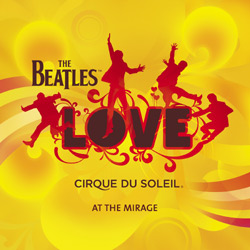
Today, I bought the Cirque du Soleil mix "Love," put together by George Martin and his son, a mix of various Beatle tracks, all cooked and stirred into a big stew. The reviews for this album are all raves. Remember the Scariens? "Love" is like that, you hear the music to one song, but the lyrics to another, different combinations of songs lead in and out.

And what is my favorite Beatles songs? They're songs that never make it onto all these re-releases. I like two of the lesser known songs from the "Help" soundtrack, "The Night Before" and "Another Girl." My favorite 45 rpm was "I Feel Fine" with "She's a Woman" on the B side. They make me happy. When I hear those, I literally get a taste in my mouth that reminds me of my youth. I can smell the memories of where I was and who I used to be, with everything still in front of me, with the possibility of a good life still...possible.

Saturday, November 04, 2006

Happy Again

It's the myspace.com phenom. Everyone has a page and so when the young die young, there's a mental photograph left behind. It collects clues to the mystery of life, and sometimes to the mystery of death, as in the case of Taylor Behl whose page linked her to her killer through their relationship as curious strangers intertwining in some bizarre, sick way.

I didn't go to Chris Williams' funeral because my husband arranged to go with friends so I wouldn't have to take off from work. I surfed over to his myspace page instead and picked up the last two entries. A week before he died, he posted to his fans that he had opted to "rejoin the fellows for our first official tour to promote the release of our upcoming DVD."

The post before that goes back four months to June. "I have been on a journey like no other the past couple of months. I have truly had to search deep within to find out who I am and what kind of person I want to be. Well, I figured it out. I want to be a man, a great husband eventually, a great father eventually, an amazing drummer, and most of all, a person that people enjoy being around. Hopefully my dad would be proud of the man that I am and the man I want to be! Happy again."

Happy again? So perhaps there was a crisis of identity, an unjoining with the band, that had been resolved briefly before the end. It reminded me of Frank, coming out of his second failed marriage, putting together what he perceived as his perfect band, finally getting the players he wanted, and then dying alone in the house. That's why I don't trust happiness. The journey like no other is always one of discomfort, pain, indecision, striving, trying, working hard, goals just out of reach. When you hit happy, it's like end game. I don't trust it.